I have always liked Halloween. After all, what’s not to like about dressing up in a costume and gathering free candy from your neighbors? As a kid, I dressed up for school, for a party at our local Y (where my dad was youth director) and of course, for trick-or-treating around our neighborhood. In fact, I went looking for candy until junior high, when one neighbor had to ruin everything by scowling at me and asking, “Aren’t you a little old for this?!?”
My mother used to make my costumes (no store-bought plastic masks for me!), usually making me look like Dracula with red lipstick flowing from the corners of my mouth. As an adult, I revived the look when I had a dentist appointment on Halloween, and wore a set of plastic vampire fangs, which I bared for the dentist, causing him to jump back a foot from my chair when I opened my mouth. (About a month after I did that, he had a heart attack, which means I won’t be doing that again!).
Since beginning dialysis, I once again began dressing up for Halloween, (which this year is on Halloween!) but now I don’t go as Dracula. Now I dress in my Martin Luther costume, the same one I used to wear for sermons on Reformation Sunday. That’s because, although I have always liked Halloween, I like it even more now that I know why the day is so special: it was the day Martin Luther nailed his 95 Theses (theological questions) to the door of the Castle Church on October 31, 1517 in Wittenberg Germany, thereby beginning the Protestant Reformation.

(Me as Luther, back when I bulked up for the role)
Why did Luther choose to post his theses on Halloween? Not because of our modern holiday, nor to get Süssigkeiten (sweets), but because the next day was All Saints’ Day (All-Hallows’ Day), a well-attended Church festival, when lots of worshipers would see the theses when they came to church. It certainly accomplished the purpose, creating quite a stir. Before long, copies of his theses spread throughout Europe, thanks to the recently invented printing press.
What was the topic of the 95 Theses? Primarily the Church’s practices of selling indulgences – papal releases of a person from purgatory, a Roman Catholic teaching that when a Christian dies, he or she must spend time before going to heaven in order to have their sins “purged” from them. A person could purchase such remission by paying the Church to see a saint’s relics (bones) or by doing a worthy deed. Typical of Luther’s questions was this: “If the Pope can truly get a person out of Purgatory, why doesn’t he just do so out of Christian love, and not charge for it?” Of course, later, Luther and the reformers realized the doctrine of Purgatory was wrong.
The Reformation was not just a cleaning up of the Church’s practices or of its corruption. It was fundamentally a call to return to the Gospel. It called for the following reforms:
1. A call to Scriptural authority. The Church had claimed both the authority of Scripture plus tradition plus pronouncements of the pope. The pope could reinterpret the Bible, claiming Christ’s authority to do so, since he was considered to be “The Vicar of Christ on Earth.” This multiple authority had led to many unbiblical doctrines and practice. The reformers called for ad fontes (back to the sources, the source being the Scriptures). The Reformation declared, Sola Scriptura, Scripture alone is the only authority, over what popes and councils may declare.
2. Recognition that we are saved by God’s grace alone, or Sola Gratia. This is the only reason we are saved. God’s mercy is extended to us by his great love and though the sacrifice of his Son. If God did not grant it by grace, it wouldn’t happen, no matter what popes say or declare. Ephesians 2:8-9 says, “For by grace you have been saved through faith. And this is not your own doing; it is the gift of God, not a result of works, so that no one may boast.”
3. We receive this grace through faith alone, sola fide. It is not by our works, though they may be commanded or beneficial. Our works are a sign that we have faith. James 2:18 says, “But someone will say, ‘You have faith and I have works.’ Show me your faith apart from your works, and I will show you my faith by my works.” The Catholic Church taught that God infuses grace into us so that we can do meritorious works. But Luther taught that faith alone saves us apart from our works. He said, “Good works do not make a man good, but a good man does good works.” Romans 3:28 says, “For we hold that one is justified by faith apart from works of the law.”
4. Next, the Reformation declared that we are only saved by the meritorious sacrifice of Christ alone – Solus Christus. This was done once on the cross, and is sufficient for all time. The priests do not sacrifice him again in the mass, nor can anyone else save us – no pope, no priest, no saint. Peter said in Acts 4:12, “And there is salvation in no one else, for there is no other name under heaven given among men by which we must be saved.”
5. Finally, the reformers taught that all this is done by and for the glory of God, which they expressed as soli Deo gloria! Everything God has done through creation and salvation, plus our purpose and works as Christians, is all for God’s glory. Paul wrote in 1 Corinthians 15:28, “When all things are subjected to him, then the Son himself will also be subjected to him who put all things in subjection under him, that God may be all in all.”
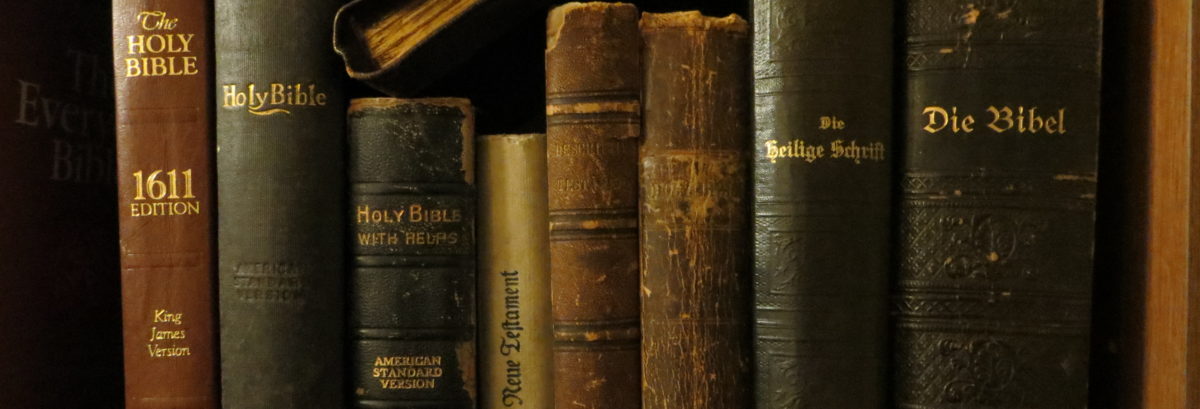
Other reformation improvements included translating the Scriptures into the common languages of the people, writing songs the people could sing (such as Luther’s A Mighty Fortress), and worshiping in people’s native tongues. Add the writing of catechisms for the teaching of families and pastors, the primacy of the congregation, the reduction of the sacraments from 7 to 2*, and the establishment of kindergartens! And don’t forget the abolition of indulgences, belief in Purgatory, prayers to saints, and the primacy of the pope.
Wow! All those treats just because Luther knocked on one door for Halloween!
Of course, the full Reformation with its Gospel theology was not completely fleshed out that day in 1517. It would take many more years of struggle and work to write out all the doctrines and establish what became the Protestant churches. But what Luther began that Halloween over 500 years ago would spread and blossom because of the Truth of the Gospel which he sought so fervently to restore. And that is the reason I like Halloween (even more than playing dress-us and eating candy!).
And now my the Lord bless you and keep you, the Lord make his face to shine upon you and be gracious to you, the Lord lift up his countenance upon you and give you peace. Amen.
Read: Romans 3:27-28; Galatians 2:16; Ephesians 2:5-8.
* Famously, Luther wavered between two sacraments – baptism and communion, and three – adding penance. As the Reformation continued, the Lutheran Church settled on the two sacraments.


