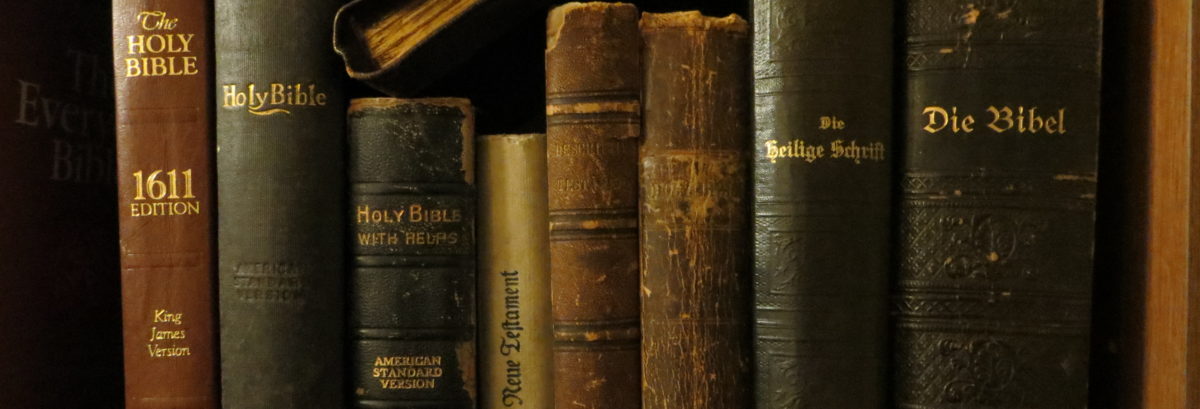
In the wake of the murder of Charlie Kirk, there have been reports of a massive revival taking place in the U.S. and even in other countries around the world. Testimonies are of people buying their first Bibles, returning to church – or going for the first time, openly professing their faith, and of huge crowds of mourners gathering for prayer and candlelight vigils. At Charlie’s memorial service, over 200,000 people gathered to hear open proclamations of the Gospel, sing hymns, and cheer when his widow, Erika Kirk, announced forgiveness for her husband’s murderer – in the name of Jesus who forgave his own killers because, “they know not what they do.” (Luke 23:34). Many people stood to announce, for the first time, that they believe in Jesus Christ. What was especially heartening was that, unlike me, many of those professing faith were young adults, those to whom Charlie directed much of his efforts.
What was, and is, happening? What is causing this massive wave of faith, this revival of Christian faith? Is this a fulfillment of the promise of Romans 8:28, “that for those who love God all things work together for good, for those who are called according to his purpose”? Is it because people clearly heard the message of the Gospel and were convinced for the first time? Is it just a social phenomenon, a result of “social” media?Is it just an emotional reaction to a young family losing their husband and father? Is it a political movement of people tired of their “side” being targeted – this time, literally – by their opponents? Or is it a genuine move of the Holy Spirit, convicting people of sin (John 8:46) and calling them to faith in Christ?
As with most things in life, the reasons are probably mixed. Some have been deeply touched, and are looking for answers. Some have been searching for God, and found a path to him. Others feel called to pick up Charlie’s torch to continue his work.
The same questions and answers can be asked of us, as well. What is our motive to believe in Christ and hold to that faith in spite of opposition and personal struggles? Is it because we were brought up in the Christian faith by godly parents, or heard a preacher in church, on TV, or on the internet? Did we find consolation in the Gospel during a time of loss? Or did the Gospel just finally make sense in a chaotic world?
Most importantly, is this revival, whether in society or in us personally, a human action, or a divine one? Are revivals man-made, or God-made?
This question has long been debated among Christians. There is a tension between God’s sovereignty over his creation (including us), and our responsibility to believe and follow God. The debate is between free will and determinism; does God choose us, or do we choose God?
On one side is Calvinism (named after the 16th century theologian, John Calvin). The other side is Arminianism (named after another 16th century theologian, Jacob Arminius).
-
- Calvinism stresses the sovereignty of God and God’s will, saying that God predestined, before creation, to create some people to be saved, and some to be condemned, apart from anything they would do. If someone would believe in Christ and be saved, it is because God made them believe. They can’t resist or fall away.
- On the other hand, Arminianism teaches that everyone can choose to believe. If God judged and condemned people for not believing, even though he prevented them from having faith in the first place, how is that just? Without free agency, how can people be punished for what they do?
Both views have led to extremes:
-
- Calvinists have said every dust particle falls where God has determined where it should land; that God has created certain people (the reprobate) for the purpose of condemning them; and even that missions are pointless, since God will save whom he will, in spite of our efforts. A true believer cannot fall away, which is proof they were the chosen..
- Arminians say that God’s hands are tied, that the Holy Spirit is “too much a gentleman” to make anyone believe. He can “woo” a person, but the decision is up to the person. Ultimately, the only free being is the person, not God. In fact, God is in the process of learning from his interactions with humanity, how to be God.
While these are the extremes of the two viewpoints, they are real. And for those who argue for either viewpoint, the two opinions are mutually exclusive; it is logically impossible to be a “Cal-minian.”
Well, you can tell I don’t agree with either theology. I am, after all, a Lutheran.
So, how did Martin Luther (yet another 16th century theologian), address the issue of God’s sovereignty vs free will? Luther wrote a book titled, “On the Bondage of the Will.” He said that in matters of life “below us,” such as choosing what to wear, what to eat, and what tools to use, we have free will. In other words, we are not robots. However, in matters “above us,” such as our relations with God. we are not free. He argued that people can achieve salvation or redemption only through God’s grace, and cannot choose between good and evil through their own willpower. Indeed, our will is in “bondage to sin,” and cannot by itself do what is righteous.
He also wrote in his Small Catechism, “I believe that I cannot by my own reason or strength believe in Jesus Christ, my Lord, or come to Him; but the Holy Spirit has called me by the Gospel, enlightened me with His gifts, sanctified and kept me in the true faith.” Luther thus affirmed that unless God calls and empowers us with saving grace, we cannot believe and be saved.
Lutherans hold to the distinction between Law and Gospel. Law is what God expects from us, and because we break it, we are condemned. We cannot do any action to save ourselves or be good enough. On the other hand, the Gospel saves us; it tells us what God has done for us. He has saved us in spite of our inability to save ourselves. It is the promise of salvation through faith apart from works. Romans 3:28 teaches, “For we hold that one is justified by faith apart from works of the law.” Righteousness comes not from our efforts, but is given to us by Christ. Our own righteousness is like “filthy rags” (Isaiah 64:6); Christ gives us his true righteousness through the Gospel.
Ephesians 2:8-10 says, “For it is by grace you have been saved, through faith – and this is not from yourselves, it is the gift of God- not by works, so that no one can boast.” This passage stresses that our faith comes from God, pointing to God’s sovereignty. But other passages point to our responsibility to believe, and to hold to the faith, such as 2 Peter 3:9, which says, “[God] is patient toward you, not wishing that any should perish, but that all should reach repentance.” Even Jesus warned, through the Parable of the Sower, that some people will believe the word of God, some will not, and others will start strong and then fall away (Matthew 13:1-9, 18-33).
Whether we believe or not, the responsibility is ours. Christ provides salvation through what he did on the Cross. Without that, we would all be lost. The Holy Spirit convicts us of our sin and of the truth of the Gospel; without his work, we would be lost. Without the Father’s forgiveness, we would not be adopted as his children (John 1:12).
How the two truths, God’s sovereignty and our responsibility, interact, is very important to our understanding of both personal faith and revivals. I will have more to say, but for now, this blog has lasted long enough! So, turn in to “Revival! Part 2” next week! In the meantime, be sure to read the suggested Bible verse at the bottom of this page.
Now may the Lord bless you and keep you, the Lord make his face to shine upon you and be gracious to you, the Lord lift up his countenance upon you and give you peace. Amen.
Read: Ephesians 1:11-14.